










News, extract
|
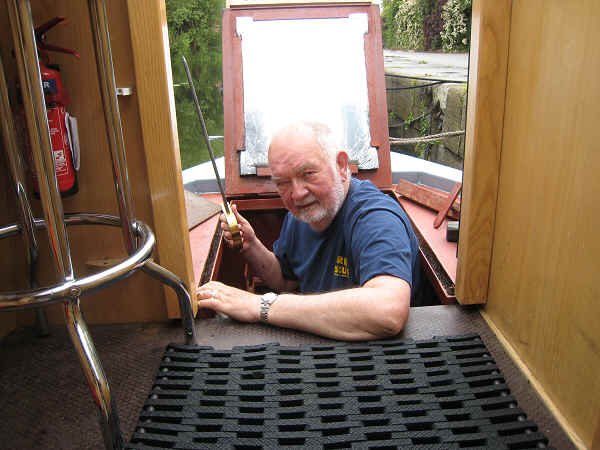
Dear Hearts and Gentle People This is my last posting of news on the web, at
least for a while. If you want
to get up to date on the news drop me a line, but at eighty we do not
expect much news. So let’s look back for a moment.
What has been going on? When I was seventy and a retired businessman I
decided to sail our narrowboat to Carcassonne and write a book about it.
Experts said that you cannot sail a narrowboat
across the Channel, a friend who was a famous writer said that any book
would be a little production about whippets and fairies, and a literary
consultancy advised that although I could write, I was too old and with
three hundred books published each week in the UK I must be joking.
I had a degree from Oxford, mainly in old
English, and in my business I had written many hundreds of reports.
Not much of a start, but something. I wrote and rewrote a couple of chapters and
found an agent, David Smith of Annette Green.
Three publishers wanted the book and David chose Transworld.
He liked the book and said I could sell 100,000 copies, Transworld
said 30.000. The boaters said
I would drown in the Channel. Well
here I am ten years later, having had the best years of my
life. My beloved Monica and Jim and Jess and I sailed in
France, the USA, and England, wrote three books (my ilogy), sold a quarter
of a million copies, met a lot of famous people,
and had adventures that still terrify me when I think of them.
Now Jim is dead and the Phyllis
May is sold and we holiday on real ships, driven by real seamen.
At
home I reply to fan mail and talk at the odd festival and Monica gives
very popular presentations. I
suffered a stroke which slowed me down no end. The doctors say my life
expectancy has not been compromised but tragically my personality is
unchanged. (Last time I looked up the life expectancy tables they said I
had been dead for some time.) So
Er, that ‘s it. How blessed
we have been – the vines of Languedoc, the majestic Rhone, the pelicans
and the alligators, Moon River and the great crossings, the Yorkshire
mills, the Trent Valley with the sky the colour of an old oil painting,
the wind in the trees and rocking the boat, Jim and Jess warm and all of
us safe in our travelling world. Behind
the stove Monica’s horse-brasses clink and glow – the antique shapes of Kings and Kesars straunge and rare. Best wishes From Tits Magee (to whom fear is a stranger), Gulfstream Rose (it took more than one sailor to change my name to Gulfstream Rose), and the cowardly thieving and disrespectful Jess. And from Jim too except he is dead. WE WERE NOT ALWAYS OLD GEEZERS
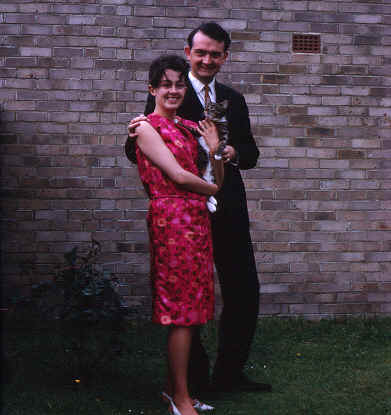
you know. In the early
sixties we were young geezers.
EXTRACT
– early in my first book as I wrote the passage below about Jim running
I realised I could write well. So I choose this passage to say
Goodbye.
I went for a jog with Jim.
He was balky because Monica had gone shopping and it was hot.
We came to the river again. The
evening sun was at our backs; the line between water and air had melted
and there were four carp suspended below us.
They were velvet black, each more than a foot long, idling in the
sunshine. I felt good, the way
you do when something is explained that had not made sense before.
I decided to run round the meadow and let Jim off the lead.
A whippet running as hard as he can is fast indeed – sometimes he
goes through a door only he can see and comes out somewhere else.
His ears go back, his eyes fix on his mark, his legs reach under
him and there is such power in his footfall that you can feel him drum the
ground.
All the time he holds his balance so he can jink or turn and as he
runs he seems to be smiling.
There is something desperate about a whippet running – he does it
as an artist, everything about him is compromised for it, and he is the
best in the world.
It makes you happy to see something doing what it is meant to do,
whether it is lazing under the water or running in a green meadow.
That evening I told a fisherman about the carp.
Jim had tried to eat his maggots and his sandwiches and I felt I
should offer a little conversation.
They grow to forty pounds round here, he said.
They were black, I said.
Are they really black?
Yes, he said, they are black.
But not underneath.
Underneath they are gold. SO
NOW GOODBYE FROM TITS MAGEE, TO WHOM FEAR IS A STRANGER.
AND
FROM JIM, FROM THE OTHER SIDE, WHERE I AM SURE HE IS HAVING A GOOD TIME
|